
Heritage Farms of Snohomish County
A journey through time and tradition
By Nicole Kraft-Canitz

The history of Snohomish County is deeply intertwined with the legacy of its farms and the families who have worked the land, many of which remain active today. Since 2000, the county has recognized 44 centennial farms — those in continuous production under the same family for 100 years or more. These farms are honored each August in a ceremony at the Evergreen State Fair. Four of these families shared their heritage and the paths their farms are taking today.
Stocker Farms stands out along Highway 9 south of the Snohomish River with its iconic red barn and signs for “Stalker Farms.” The 150-acre farm is run by Keith Stocker, a fourth-generation farmer, from the original farmhouse built in 1923.
Keith’s great-grandfather, George Stocker, began logging in the valley during the late 1800s. By 1919, his grandfather, Ed Stocker, along with his three brothers, settled on their own adjacent farms, engaging in “stump farming”— raising dairy cattle and crops around the stumps left from logging while clearing land for field crops.
The farm’s trajectory changed in 1957 when the state constructed Highway 9, bisecting the farm and destroying the dairy barns. Keith’s parents shifted from dairy farming to raising beef cattle and growing peas and other canning crops for the Cedar Green Cannery in town. After the cannery closed in the early 1980s, they began “truck farming,” selling crops to local grocery stores. They opened a roadside farmstand in 1983, marking a new era of direct sales to the public.
In 1997, Keith and his wife made the bold decision to leave their successful careers in the San Francisco Bay Area and return to the farm. They were determined to shift from wholesale to direct market retail, prioritizing “growing families instead of crops,” as Keith puts it. This pivot came at the perfect time, as the merging of grocers in the late ’90s resulted in a shift to out-of-state produce sourcing.
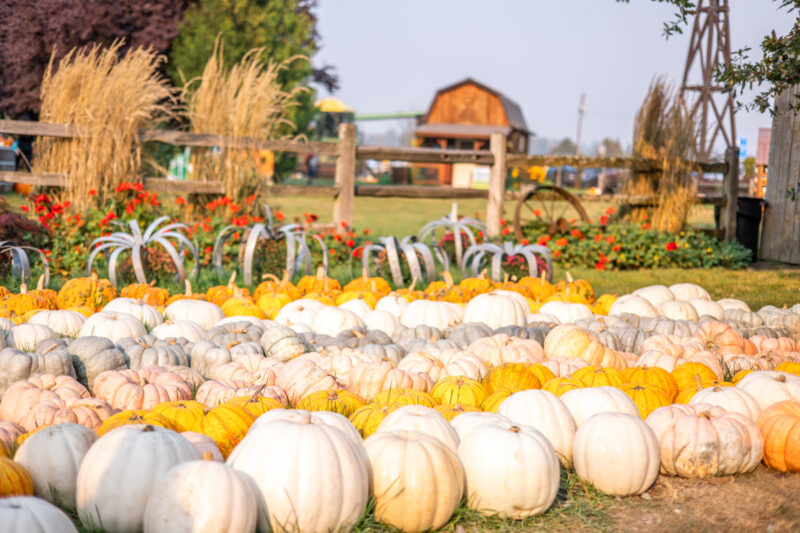
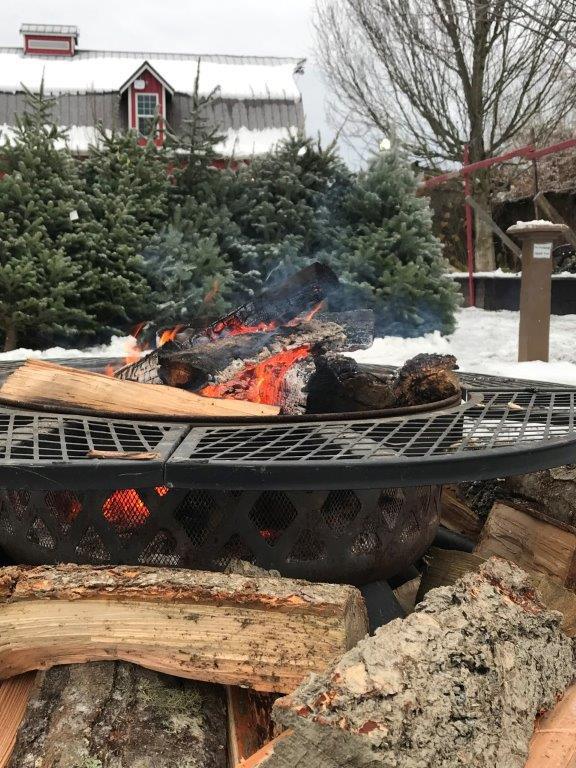
Today, Stocker Farms attracts hundreds of visitors each day in October. The farm offers year-’round experiences for families and the public, including a pumpkin patch, weddings and corporate events in the barn, family-friendly corn mazes, the famous haunted “Stalker” maze, U-cut Christmas trees and the Mountainview Blueberry Farm.
Keith’s philosophy: “Don’t underestimate a farmer. To be successful, a farmer must be a scientist, a businessperson, a marketer and a million other things.”
Hidden Meadows and Choice Turf Farm are also continuations of the Stocker family’s legacy, now in the hands of the fifth generation. April runs the turf farm with her husband Jay, while her brother Mick and his wife Brigitte manage the wedding venue at Hidden Meadows.
The family’s farming roots run deep, tracing back to the Stocker, Craven and Bartleheimer family farms. Their maternal grandparents, Jonie and Walt Bartleheimer, founded Walt’s Milkhouse in Everett, now a coffee shop. Their cousins continue to operate the original Bartelheimer Farm, now known as Snohomish Valley Farms.
April vividly remembers her parents’ pivot from dairy farming to growing turf in 1987, spurred by a federal dairy buyout that required them to stop dairy production for five years. The buyout came as a surprise to her father, who had submitted what he thought was a high bid, hoping to keep the farm as a dairy. In 2007, the milking barns were converted into the wedding venue now known as Hidden Meadows, further diversifying the farm’s offerings.
The article continues below.

The farm’s origins date back to 1913 when Albert and Ellen Bailey emigrated from England and purchased 52 acres for logging. By 1918, Mary’s great-grandparents, Earl and Flossie Bailey, had established a dairy farm. Her grandfather, Cliff, was an early advocate for farmland preservation and sold the development rights to the Washington Farm Trust, establishing a “forever farm” for the family.
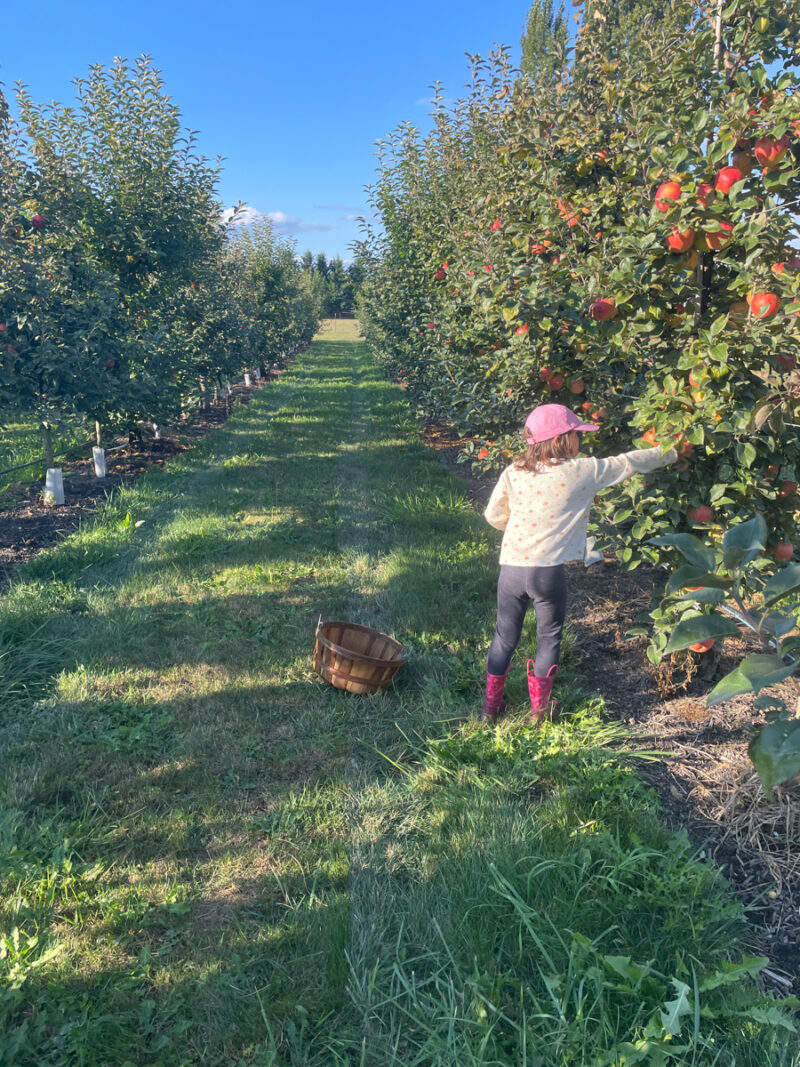
In 1986, the Baileys planted their first vegetable U-pick garden, which now spans 50 of their 350-acre farm and includes flowers and fruits. The family also rents part of their fields to local dairy farms for corn production. Mary’s cousins bought out and now run Bailey Family Christmas Trees Farm next door. Mary and her family are careful to keep their land recognizable as a working farm, in keeping with her grandfather’s wishes.
Like many farmers in the region, Mary emphasizes collaboration over competition with other farms.
“Instead of trying to get a bigger piece of the pie, let’s make the pie bigger,” Mary shares of her philosophy, reflecting a forward-thinking approach that views regional growth as an opportunity rather than a threat to maintaining her family and the valley’s farming heritage.
Bob’s Corn is another shining example of how Snohomish County farms have evolved over generations. Founded by Michael Ricci as an apple orchard in 1888, it transitioned into a dairy farm over the years and was expanded in 1969 by his grandson, Darrell, who bought additional land in 1969. It won “Dairy Farm of the Year” in 1976.
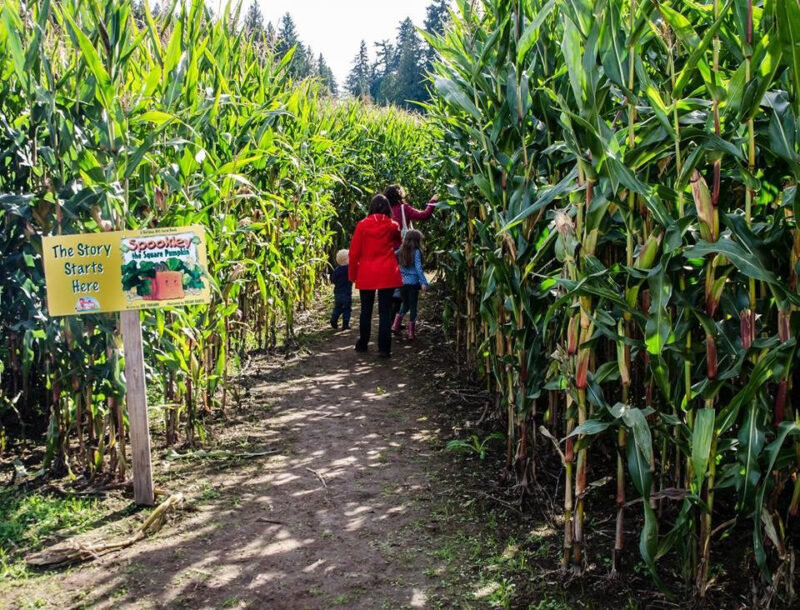
Darrell’s son, Bob, now runs the 280-acre farm with his wife, Sarah, and their daughters. Less interested in cows, Bob began growing sweet corn to earn money for college. After college, he returned and started wholesaling corn to Safeway. He later started a pumpkin patch in 1996. After taking a class on maze design, he successfully launched a corn maze that now draws large crowds.
Today, Bob’s Corn spans 280 acres of corn, pumpkins and hay. Visitors flock in the fall for corn mazes, pumpkin patches and family-friendly farm activities. The farm also hosts a sunflower festival each August and September, easing into the busy fall season.
While Bob embraces innovation, he remains committed to preserving the farm’s essence. As he wisely notes, “Just because you can make money doesn’t mean you should.”
Recently, the Ricci family decided to sell the farm’s development rights to the Washington Farm Trust, ensuring that the land will remain a farm for generations to come. Their daughters are already dreaming up ways to enhance the farm experience for future visitors. It appears Bob’s Corn will continue to be a place where family memories grow.
These farms share values that have sustained them: a commitment to preservation for the future, respect for heritage, looking for opportunities in hardships, collaboration, a strong work ethic and a deep prioritization of family. This heritage has shaped Snohomish County and will continue to guide it into the future.