Wits and Grit
Ours is the story of the skies
By Richard Porter
You can’t tell the story of aviation in Snohomish County without taking into account the character of the locals. After all, it takes a special type of guts to think that you can devise a contraption that defies the pull of gravity, something mechanical that soars into the sky to deliver victory or even revolutionize the future.
Once upon a time (not so long ago), the Pacific Northwest was populated by only the foolhardiest of fortune-seekers: roughnecks who were willing to leave the genteel cities of the East Coast and Midwest to try their hand at logging, fishing and — soon enough — aerospace.
Let’s meet some of these characters and companies — both those who defined the culture of aviation innovation and those who still carry on that legacy.
The story is just “plane” wild.
RISE OF THE RIVETERS
Today, the Public Market Building at the intersection of Grand Avenue and California Street in downtown Everett is home to several small businesses. Visit and you’ll find granola folks perusing the racks of plants outside, dining at The Sisters Restaurant or shopping in the deli of the Sno-Isle Foods Co-op.
But, take a closer look at the worn floorboards and brick walls of this building. If you were to step inside 2804 Grand Avenue 80 years ago, you would hear the mechanical clink and hiss of pneumatic guns, shouted orders of the assembly line and maybe even the sound of female voices lifted in song.
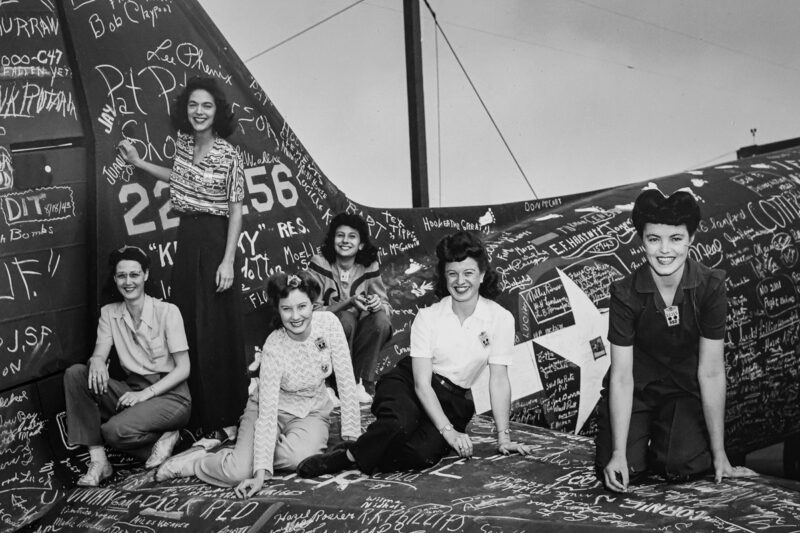
During World War II, this building served as a Boeing sub-assembly plant. All three floors of the structure were dedicated to the building of pressurized cabins for B-29 Superfortress bombers. Women aged 16 to 66 wore overalls and caps, bucking rivets into aluminum components, gluing seams and minding the posters on the factory wall reminding them that “Loose lips sink ships.”
“We did what we had to do to survive, and we made the best of it. I had the wherewithal to tackle any job — if it could be done, I figured I could do it,” says one Rosie interviewed in the Boeing-published book Trailblazers. “So, when they asked, do you want to try this? I thought, yes, of course. Someone is doing it, why shouldn’t I?”
Everett riveter Margaret Rynning Mickelson recalls, “I thought we were making big wages; 65 cents an hour… if you lasted six months it went to 85 cents.” She signed up for the war effort at age 21, part of a wartime workforce that ran three shifts a day, seven days a week out of the brick building on Grand Avenue.
Riveters balanced home and work life (a challenge still all too familiar for working moms) and many of them, including black workers, came from across the country to seek quality jobs and competitive wages with the war effort on the West Coast. One such worker was Anabella Morgan, who rode the train from New Orleans to Seattle in a five-day journey shortly after she learned about the attack on Pearl Harbor. She was only 20 years old and traveled with only a basket of food and a large bottle of sarsaparilla in her pocket.
Anabella soon gained a reputation as the best bucker in the Boeing plant and the bosses bumped her wages to $1.29 an hour ($23.41/hour in today’s wages).
After the Allies won, the Boeing sub-assembly plant shut down immediately and the women hung up their overalls.
It would be several decades more before these women were “allowed” out of the home and back into the workforce in any advanced position.
But, perhaps, as they returned to their houses after the factory shut down, they walked a little taller, knowing that their self-reliance and ‘round-the-clock grit had helped to defeat the Axis powers and liberate the world.
America certainly couldn’t have done it without them.
The article continues below.

EXPERIENCE THE LEGACY OF VINTAGE FLYING MACHINES AND MORE
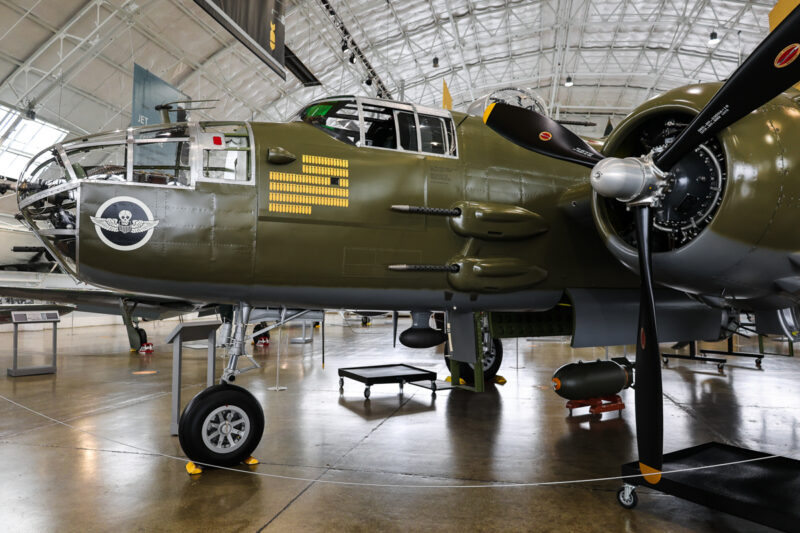
The story of the riveters is may be told best by the Flying Heritage & Combat Armor Museum, located at Paine Field. The FHCAM collection spans two full airplane hangars dedicated to meticulously-restored vintage aircraft, tanks, motorcycles and helicopters.
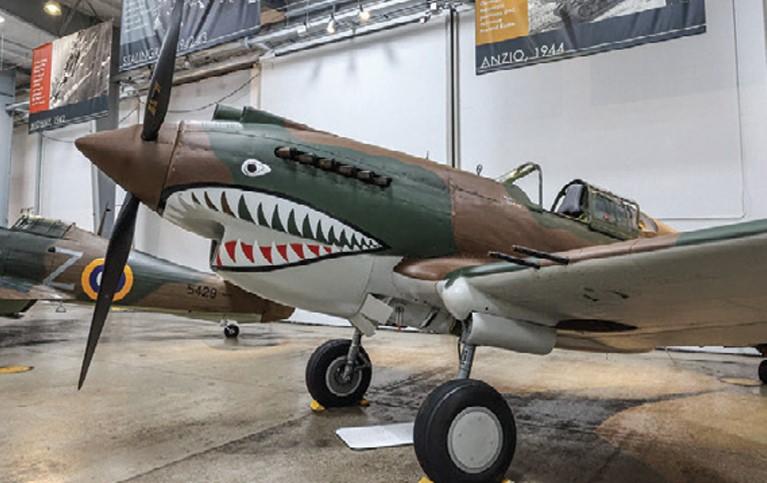
These vehicles look as good as the day they rolled off the assembly line and are accurate down to the decals inside the turrets.
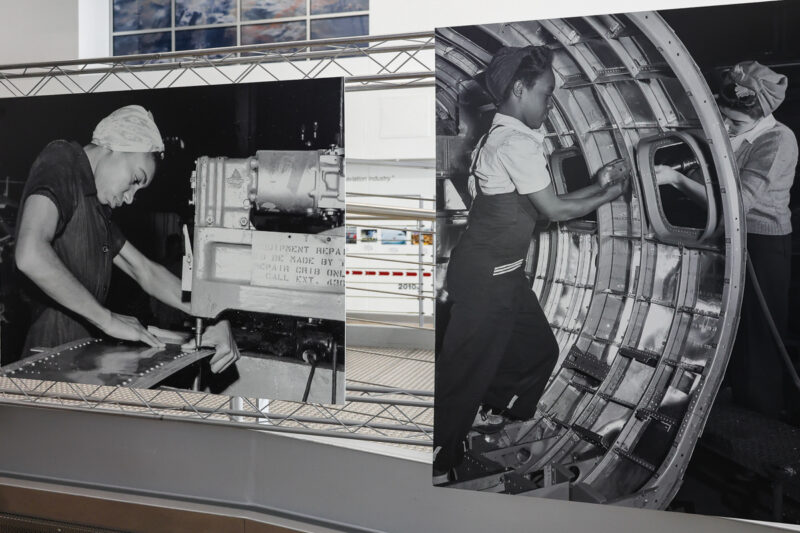
Such loving dedication is the product of a team of volunteer aviation enthusiasts and some serious capital. The FHCAM was originally collected by the late Paul Allen, co-founder of Microsoft. To say he was an aviation history buff is somewhat of an understatement. Today, his collection has been sold posthumously to the Walton family. The Waltons have some money to throw around, seeing as how they own a little company known as “Walmart.”
FHCAM prominently features the stories of both Rosies and female pilots and the pivotal roles that they played in working for Uncle Sam.
The history of aviation is within reach at Paine Field; but so is the future of airline travel.
TURNING PLANTS INTO POWER: THE SAF BIOFUELS R&D CENTER
Less than a mile from FHCAM, Washington State Governor Jay Inslee wears a hard hat and a reflective vest as he steps out of the bus onto the shimmering tarmac of Paine Field. It’s a 90-degree day in early July and heat waves shimmer above the ground. Dignitaries from the local government stand by, sweating into their dark suits.
Governor Inslee is here to see the future site of the Sustainable Aviation Fuels Research and Development Center, a collaborative project of the Snohomish County government and Washington State University. The SAF Center is working to expand sustainable aviation fuels research, development and adoption.
“Transforming aviation is critical to achieving our climate ambitions,” says Governor Inslee to the assembled crowd. “We have a winning combination here at Paine Field with innovative companies, a skilled workforce and the commitment to sustainability and bold climate action.”
And the location of the center is no accident: this is the heart of aviation country, the globally recognized aerospace manufacturing region that Boeing calls home.
Or, as Senator Marko Liias, Chair of the Washington State Transportation Committee, remarks, “We no longer have to choose between great jobs and a healthy planet.”
The SAF R&D Center is still a work in progress, but the results of this forthcoming facility are sure to create healthier air well into the future thanks to these visionary leaders.
HYDROGEN AND ELECTRICITY TAKE OFF
The SAF R&D center is only one facet of a larger movement toward clean airline travel. This trend is regional, but has global implications, as carbon-neutral technologies continue to expand.
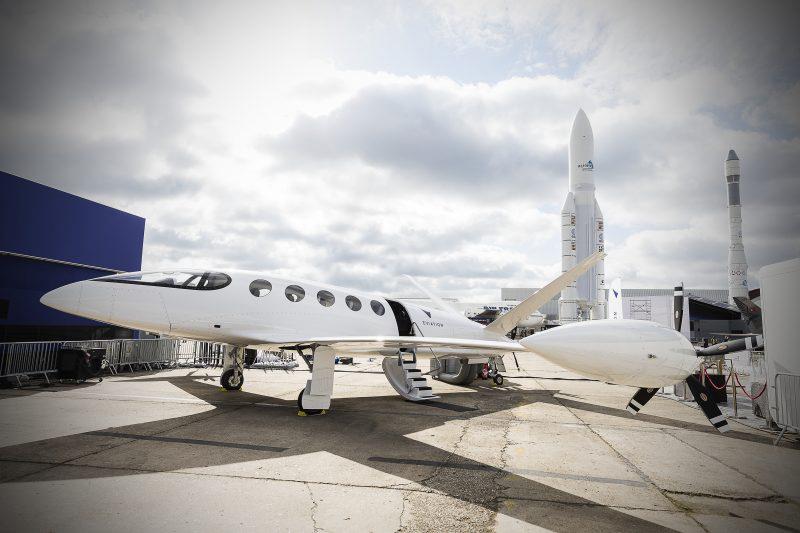
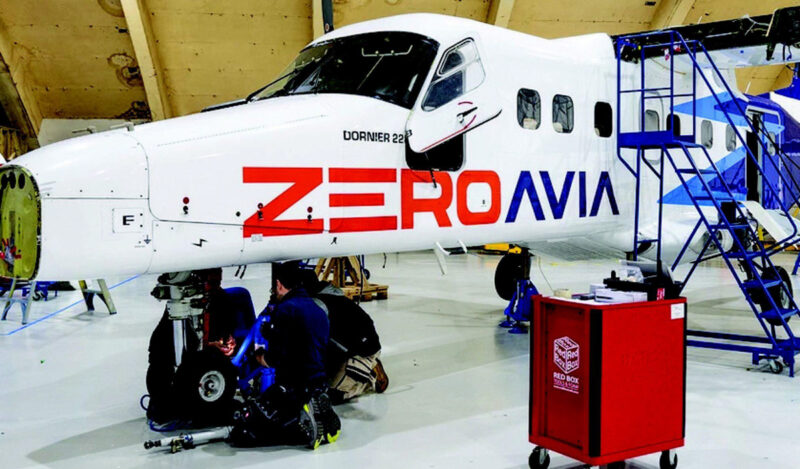
ZeroAvia and magniX at Paine Field are two cutting edge companies developing scalable hydrogen and electric propulsion technologies. ZeroAvia is starting to make inroads into the European flight market with more expected growth in the coming decades.
Eviation, a company located in Arlington, is approaching aerial decarbonization from a different angle. Their Alice aircraft is the first ever all-electric commuter aircraft. Their business has flown sky high, with over 600 aircraft on order from Air New Zealand, Cape Air and DHL. These airplanes sell at $4 million each, which is a fantastic boon for our local economy, bringing clean aviation dollars into our community. Electric airplanes are also remarkably quiet, which makes for a more enjoyable ride for passengers and helps to cut down on noise pollution. Quieter skies create a better quality of life for all, but especially folks who live in close proximity to airports.
Increasingly, global investors are understanding that putting their money into clean aerospace startups is a surefire bet on a future that will require more green technology to keep pace with climate change. It’s clear that Snohomish County is stepping up our supply of aerospace products to meet the demand.
THE FUTURE OF FLIGHT IS IN OUR BACKYARD
For those who want to peek over the horizon to glimpse the cutting edge of technology, the Boeing Future of Flight Museum offers an interactive and immersive look at where the aerospace industry is headed. The museum, which is owned and operated by Boeing, offers exhibits that demonstrate how airline technology has progressed over the decades as airplanes and spacecraft become more efficient, safe and eco-friendly.
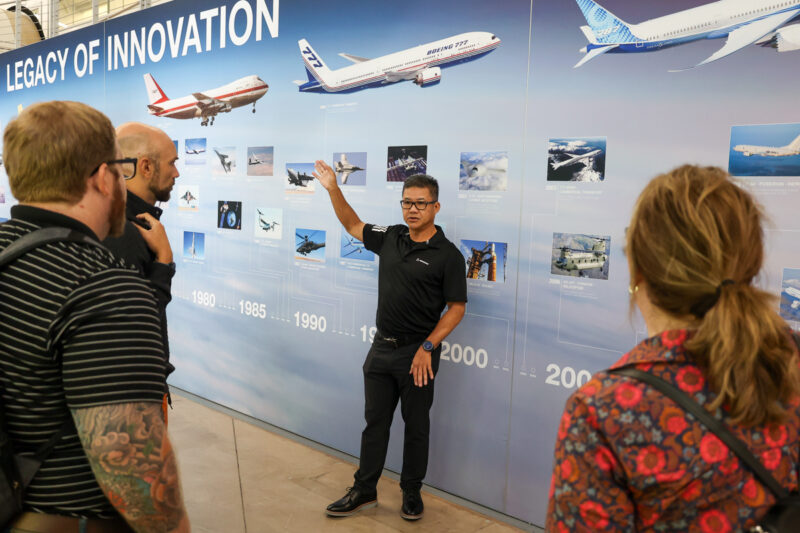
The Future of Flight also prepares for a brighter tomorrow by offering STEM classes for school-aged children. Kids can learn how to fly a drone in a drone cage or program a robot to move through a maze. They can also step into part of the International Space Station to see what life is like for astronauts orbiting the earth.
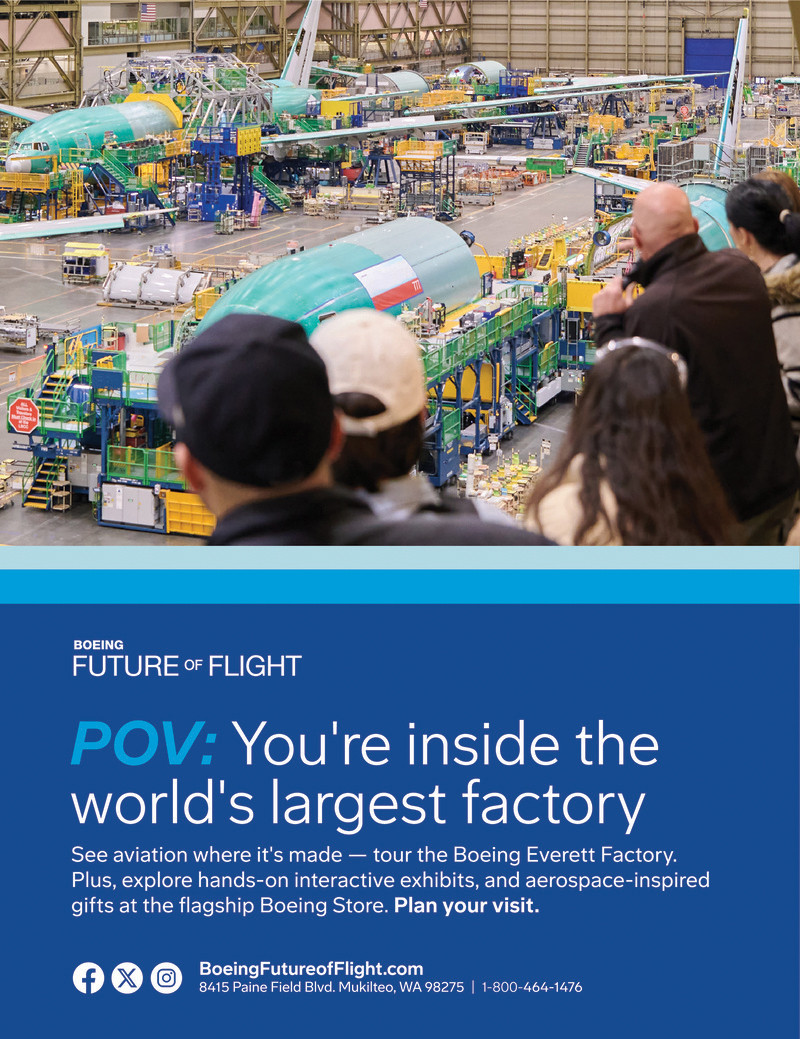
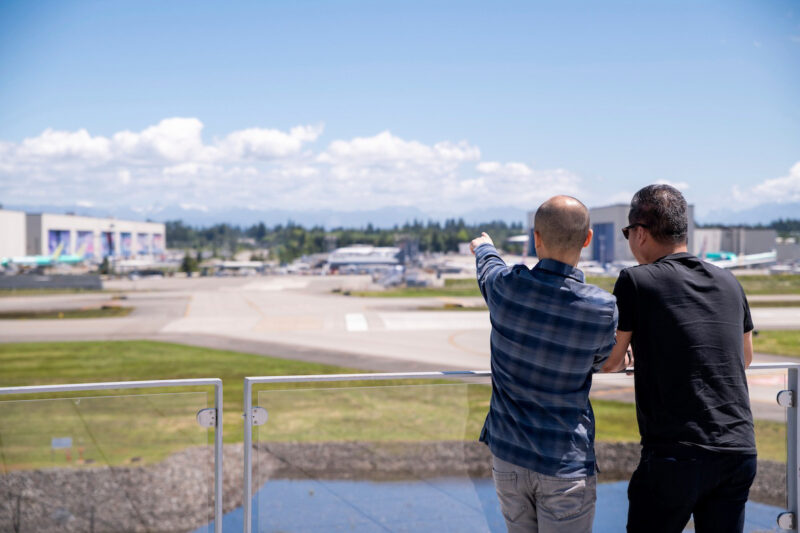
The Boeing Future of Flight also offers the Boeing Factory Tour, where visitors can take a guided tour through the largest building in the world by volume. The interior of the factory is like an entire city packed into a few enormous hangars, complete with a complex road system, an on-site dental office and cafes. The scale of the assembly line is hard to take in as you look down onto the factory floor and realize that 787s look like toy planes when seen within the scale and scope of the Boeing Factory. It’s easy to see why the Future of Flight Museum and Boeing Factory Tour are truly international destinations, drawing legions of aerospace fans from across the globe to witness the epicenter of aviation.
WHY AVIATION?
It’s said that a young William Boeing became infatuated with flying machines when he witnessed them perform at the Alaska-Yukon-Pacific World Exposition in 1909. He transformed an old boatworks on the Duwamish River into an airplane factory and set to work building better, faster machines to rule the air.
The story rolls on.
From bucking rivets to creating cleaner ways to fly, aviation has always been a uniquely “Snohomish County” marriage of wits and grit, a winning combo.
What will we create next? The sky’s the limit.
Visit the Flying Heritage & Combat Armor Museum: 407 109th St. SW, Everett, WA 98204
You can learn more about the Sustainable Aviation Fuel Center at saf.snoco.org
Experience the Boeing Future of Flight Museum & Factory Tour: 8415 Paine Field Blvd., Mukilteo, WA 98275