
Pathways with Purpose
Pathways with Purpose
Snohomish County is turning connection into outcomes: 62% of high schoolers now complete dual-credit courses, while the WSU Everett Degree Pathways Program smooths transfer so students earn faster with fewer barriers. Add AJAC apprenticeships and MESA’s lift for underrepresented STEM students, and you get clearer paths, real jobs, and equity that lasts.
Educational ecosystems strengthen the region
By Corrie Wilder, Ed.D.
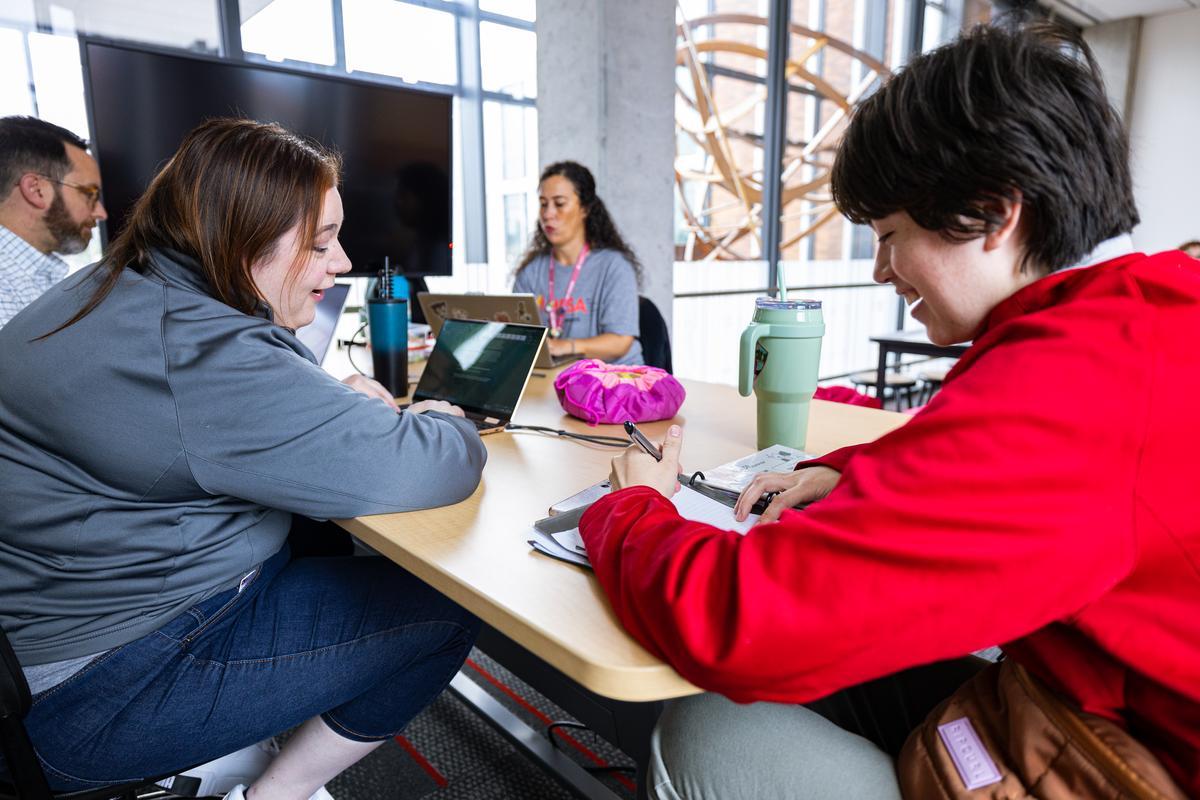
In Snohomish County, we’re doing something special—and it’s changing lives.
Across high schools, colleges, and universities, there’s a growing commitment to making education more connected, more intentional, and aligned with the real needs of our region. These partnerships go beyond degrees; they’re about momentum—helping young people (and not-so-young people) find their way into meaningful careers and building a community where opportunity is something we create together.
From dual-enrollment programs that let high schoolers earn college credit to career-focused degrees that open doors to aerospace, healthcare, tech, and more, we’re seeing what’s possible when education meets purpose.
At the heart of it all is a powerful idea: when we invest in people, we strengthen the region. A thriving community depends on accessible, high-quality education that aligns with the needs of local employers. And here in North Puget Sound, that’s exactly what we’re building as educators—one pathway at a time.
Building Bridges: Early Exposure and Dual Credit
The journey begins long before a student steps onto a college campus. An exhibit at the Imagine Children’s Museum, a middle school science class, or a hands-on workshop can spark a sense of purpose that lasts a lifetime.
In Snohomish County, that spark is being nurtured through programs connecting students to real career possibilities early on.
The Snohomish STEM Network—a collaboration among K-12 schools, colleges, community partners, and industry leaders—is leading the charge.
The article continues below.
Programs like STEM Like Me!, which brings professionals into classrooms, and Exploring Careers and Healthcare Opportunities℠ (ECHO), which offers immersive experiences in healthcare, help students see themselves in roles they may never have imagined.
Dual credit is another powerful way to expand access. Programs like College in the High School have grown rapidly, giving students the chance to earn college credit without leaving their high school—and often without paying a dime. These courses jumpstart college pathways, build confidence, and make higher education feel within reach. In fact, 62% of Snohomish County high schoolers complete at least one dual credit class—well above the state average.
These efforts are working. By embedding college-level learning and career exploration into high school, we’re reaching students who might not have seen college in their future. That includes students from rural, low-income, and historically marginalized backgrounds—students who now know they belong.
The Community College Advantage: A Hub for Skills and Transfer
Community colleges like Everett and Edmonds are doing more than offering classes. They’re acting as launchpads. Whether students are heading into the workforce or planning to earn a four-year degree, these institutions help them move forward with purpose.
Programs like the Sno-Isle TECH Skills Center help build that momentum even earlier. A collaboration among 14 local school districts, Sno-Isle gives high school students hands-on training in five career pathways—from healthcare to advanced manufacturing—equipping them with practical skills and industry insights.
One of the most forward-thinking transfer solutions in our region is the Degree Pathways Program (DPP), a partnership between Washington State University Everett and colleges like Everett Community College. It allows students to be co-enrolled at both institutions—earning their associate degree while progressing toward a four-year credential, with fewer barriers and more support. It’s a streamlined way to remove the guesswork—and the roadblocks—from the transfer process.
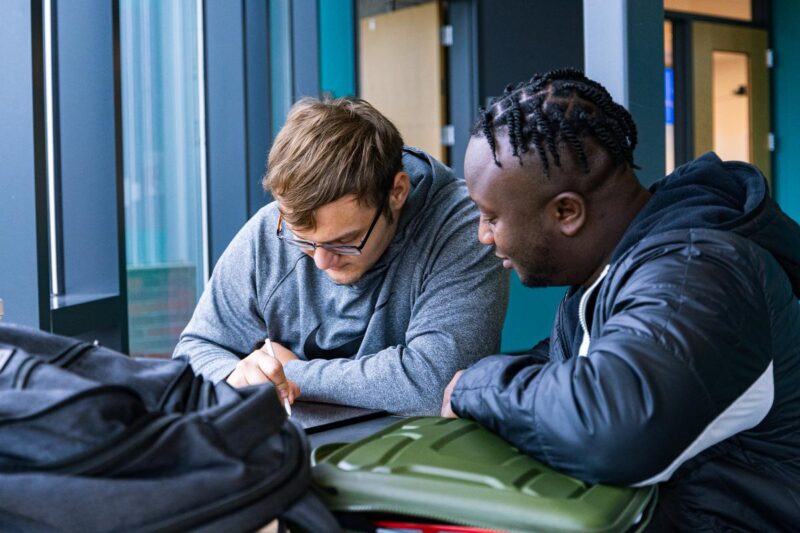
Students in the DPP get the best of both worlds: financial aid that works across campuses, advising at both schools, and access to campus resources. Transcripts update automatically, credits transfer cleanly, and students build a sense of belonging. Rather than preparing to transfer, they’re already part of the Cougar community.
The program began with business and hospitality and is now expanding into fast-growing fields like cybersecurity and data analytics. As the first model of its kind in Washington state, it’s proof of what’s possible when student success and access come first.
Industry Alignment: Degrees for the 21st Century Workforce
In Snohomish County, higher education is deeply connected to the local economy. Colleges and universities work closely with employers to ensure students graduate ready for high-demand roles.
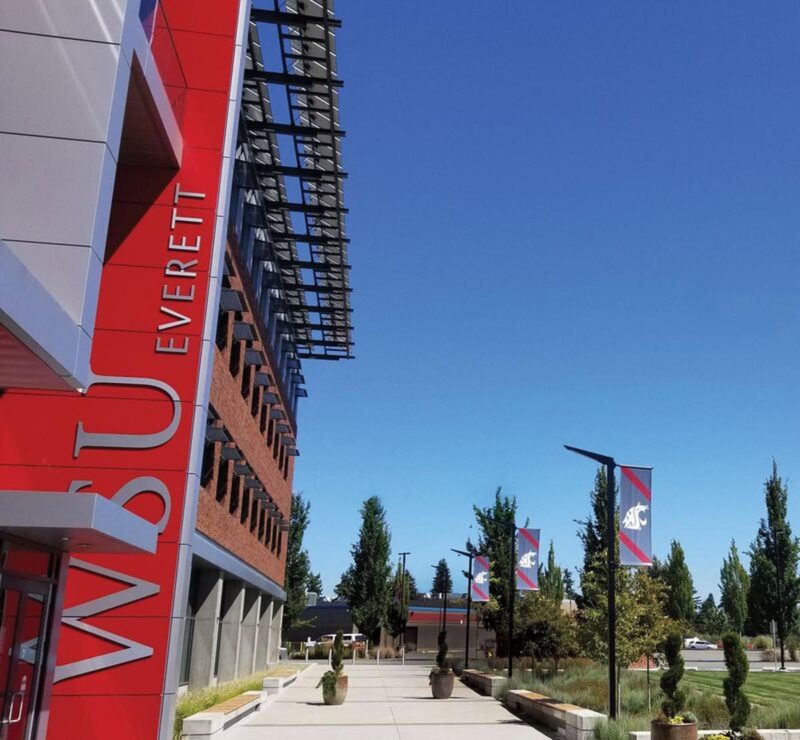
At Washington State University Everett, degrees in engineering, software, and data analytics are designed to match the needs of top industries. It’s no coincidence that so many students at WSU Everett and UW Bothell are majoring in STEM—these programs are built for the jobs of today and tomorrow.
Career readiness doesn’t stop in the classroom. Across the region, students gain valuable experience through internships, apprenticeships, and hands-on learning opportunities. One standout is the Aerospace Joint Apprenticeship Committee (AJAC), which offers advanced manufacturing training right here in Snohomish County. High school students explore careers in machining, mechatronics, and automation while earning both high school and college credit—a powerful head start in a key regional industry.
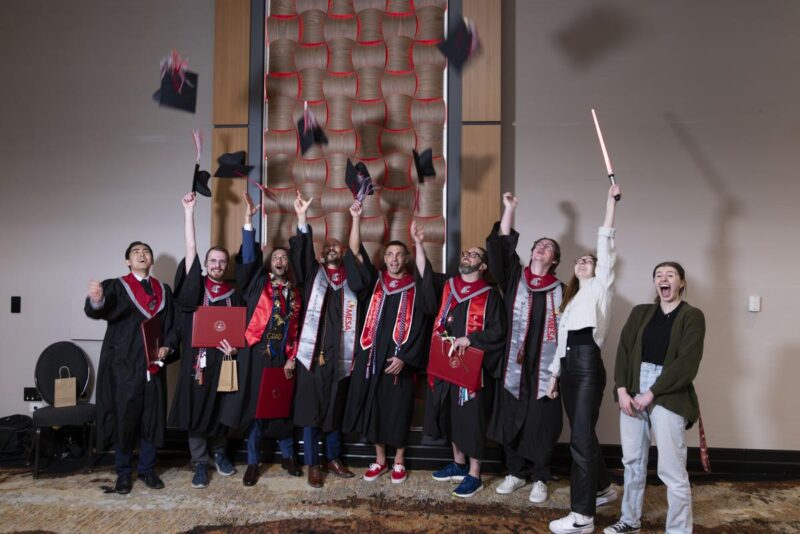
Another key piece is MESA (Mathematics, Engineering, Science Achievement), a statewide program with a uniquely powerful footprint at WSU Everett. As the only university campus in the region with MESA, WSU collaborates closely with local community colleges to support underrepresented students in STEM, helping them not only persist but also thrive. Since launching its first cohort, MESA has seen steady gains in student achievement, with more students earning honors-level GPAs and several maintaining a 4.0. When support, access, and opportunity align, students soar.
And in a field urgently in need of talent, the Youth Early Childhood Education Career Pathways program is helping high school students gain classroom experience and begin working toward certification. After the region lost 25% of its childcare workforce during the pandemic, this program offers a smart and responsive solution—and a reminder that career pathways can start earlier than we think.
Equity, Economy, and Community
When education is connected, intentional, and inclusive, it does more than prepare students for jobs—it strengthens an entire region.
That’s what we’re seeing here in Snohomish County. These “Pathways with Purpose” are creating something greater than the sum of their parts: an ecosystem where education fuels economic growth, opens doors, and builds a foundation for lasting equity.
For students, these pathways offer clarity and confidence. They reduce barriers, spark ambition, and make postsecondary education feel possible. With hands-on learning and real-world support, students are graduating with direction as well as degrees.
For local employers, this means access to a ready, relevant workforce—a pipeline of talent aligned with industry needs.
It’s the kind of alignment that fuels innovation, attracts investment, and keeps economic opportunity rooted here at home.
Most importantly, this work is a force for equity. From dual credit and pre-apprenticeship programs to seamless university transfers, we’re widening the on-ramps to success—especially for those who’ve faced the highest barriers. Organizations like the Washington Alliance for Better Schools (WABS) and the Latino Educational Training Institute (LETI) are essential partners, engaging families and ensuring every student feels seen, supported, and set up to thrive.
As our region grows, this shared commitment to collaboration across sectors and systems will remain one of our greatest strengths. Purposeful pathways—rooted in equity, powered by education, and carried forward by all of us—are what a stronger future looks like.