The Living Art of La Conner
By ANNE BASYE
“Art’s Alive!” is the name of La Conner’s annual arts celebration—and it couldn’t be more appropriate.
Art is alive in this charming waterfront town. For hundreds of years, Salish Sea natives carved cedar canoes and wove cedar hats in the area. In the 1930s, Charlie Edwards set to work carving the large totem pole in Swinomish Village, on the west side of the Swinomish Channel.
Just about the same time, artists Morris Graves and Guy Anderson turned up in a Model T Ford with no top. Looking for a cheap place to live and paint, they rented a partially burned house on the hill. La Conner was changed forever.
As artists followed Graves and Anderson, this quiet backwater, which didn’t even have a sewer system until 1975, became a center of art. Author Tom Robbins (Even Cowgirls Get the Blues) arrived in 1970. A second and third wave of artists followed, squatting for free in shacks along the Skagit River or renting modest houses in town.
“La Conner had a very open mind,” said Cathie Wyman, whose husband’s family befriended the new arrivals. “They accepted anybody. You could just be goofy as hell and it was okay, you were just another goofy guy.”
While fewer artists reside in La Conner, given its shift away from the low-rent district of Skagit County, Robbins has remained. Last year the town threw an appropriately quirky parade in celebration of Tom Robbins Day.

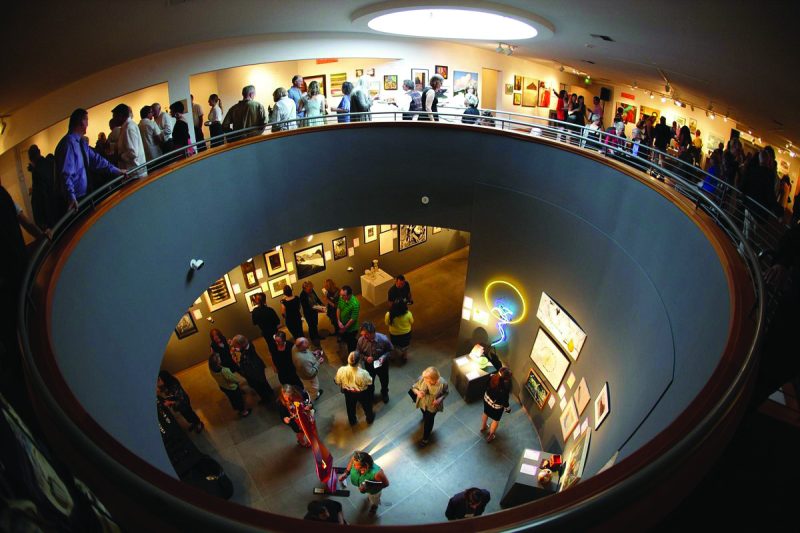
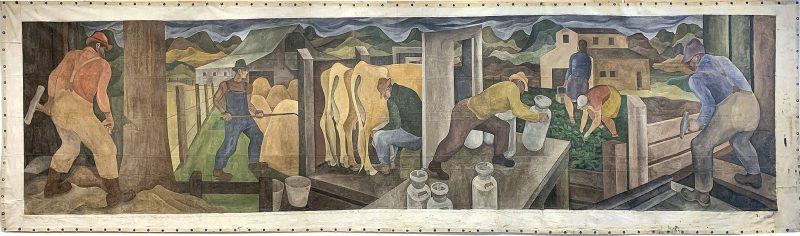
An afternoon visit can immerse you in the art that lives on here, indoors and out. Start by visiting the Museum of Northwest Art (121 S. First Street). The enormous second-floor “Mural of Skagit County Agriculture 1941” by William Cumming depicts everything from milking cows to felling timber and baling hay. Through 2024, you can view this jewel of depression-era social realism alongside other works from MONA’s permanent collection.
“The Northwest School of Art remains one of the important visual narratives of our region,” says MONA Executive Director and Chief Curator Stefano Catalani. The upstairs works “explore the points of contact between the many narratives and sensibilities that comprise Northwest art.”
If you’d like to own your own piece of Northwest art, visit MONA’s bookstore and gift shop, or consider attending the annual June art auction (https://www.monamuseum.org/2024-art-auction). Find present-day Skagit County landscapes at La Conner Seaside Gallery (101 N. 1st Street). For contemporary regional artists, visit Marts Modern Gallery (719 S. 1st Street) or Forum Arts (721 S. 1st Street). Textile art is on view at the Pacific Northwest Quilt and Fiber Arts Museum in the beautiful Gaches Mansion on Second Street.
The article continues below.
A lovely country drive takes you to the River Gallery, near the Skagit River (19313 Landing Road). Its spring 2024 show runs March 30–April 28. If you are interested in work by Guy Anderson, proprietor Sylvia Strong can arrange a showing.
You don’t even have to enter a gallery to see art in La Conner. It’s in restaurants (Coa and Nell Thorn are two that come to mind), on street corners, in front yards, and along the channel boardwalk. Some are whimsical. The mayor has a large pink pig on her front porch. A famous local dog has his own statue. A ball-shaped buoy, mounted on a hydraulic mining nozzle, is repainted with a new theme every season.
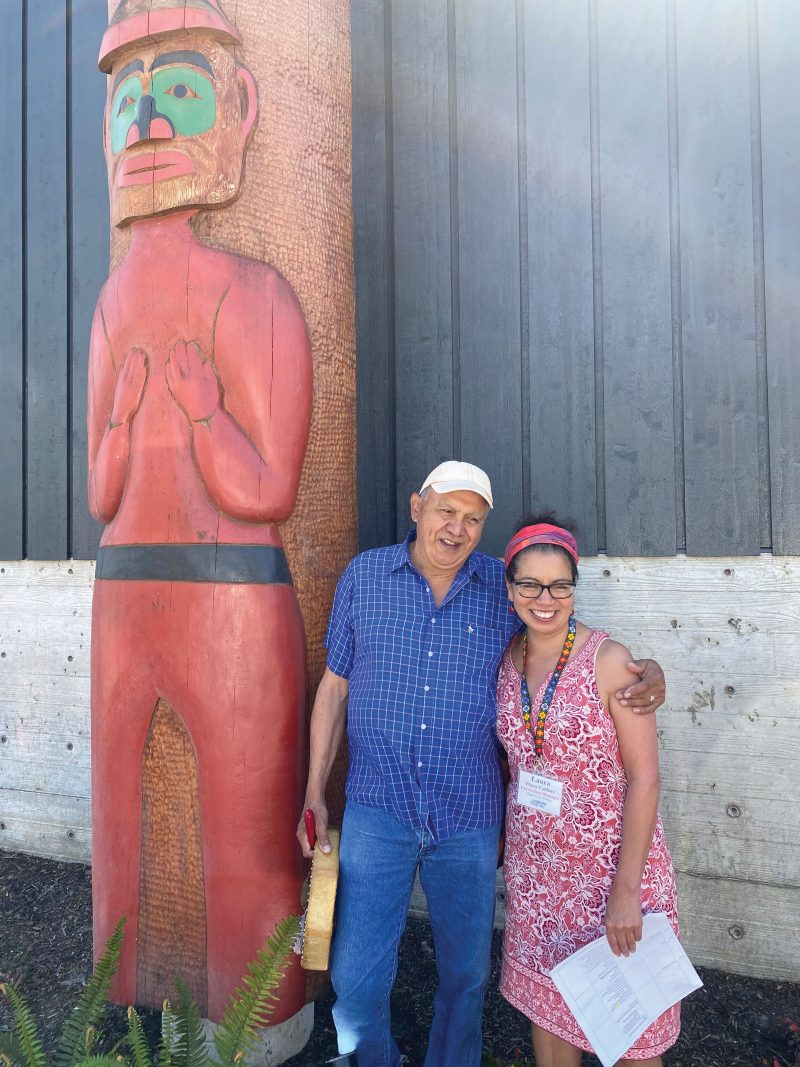
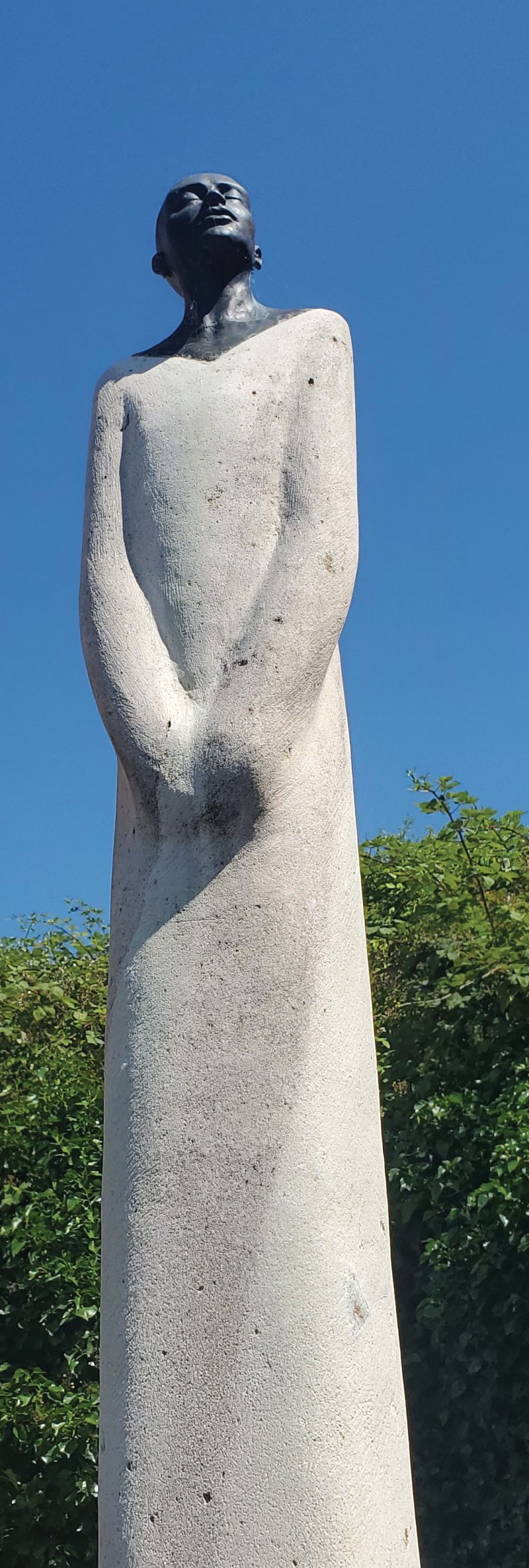
Discover it as you amble, or download the La Conner Arts Commission’s helpful map to organize a walking tour (www.townoflaconner.org). Several pieces are by Swinomish singer-carver Kevin Paul. One of his totem poles stands in front of La Conner Elementary School on Sixth Street. Quite new is the pole at the new La Conner Swinomish Library on Morris. Inside the library, find a sculpture by longtime resident, the late Clayton James.
La Conner’s most famous artist now is Swinomish photographer Matika Wilbur, whose New York Times bestseller Project 562: Changing the Way We See Native America was launched last year at the Swinomish Social Center. Seaport Books on Gilkey Square carries her books, which include portraits of members of all 562 Native sovereign territories.
“You could walk around and get to know people, watch live demonstrations, listen to music,” said Wyman. “It was a town event.”
To get a feel for the light and the view that drew artists to La Conner, walk or drive to the Skagit County Historical Museum at the top of Fourth Street, the highest point in town. Even if you’ve never picked up a paintbrush, you’ll be inspired by the panorama of mountains and farmland from the Museum’s balcony (open Thursday – Sunday, 11 to 4) or parking lot.
If you’re really smitten with La Conner’s art, come back the first weekend in November for the Art’s Alive! festival. In its early days 40 years ago, Art’s Alive arranged for artists to display their work in stores. Spend the weekend soaking in two floors of art in all media at an event held by the La Conner Arts Foundation.
Before you leave, cast a vote to help your favorite piece win the People’s Choice Award. In a small way, you’ll be adding your own mark to this town’s long creative history.