When the Tide is Out…
Cultures connect to community through our waterways
By ELLEN HIATT
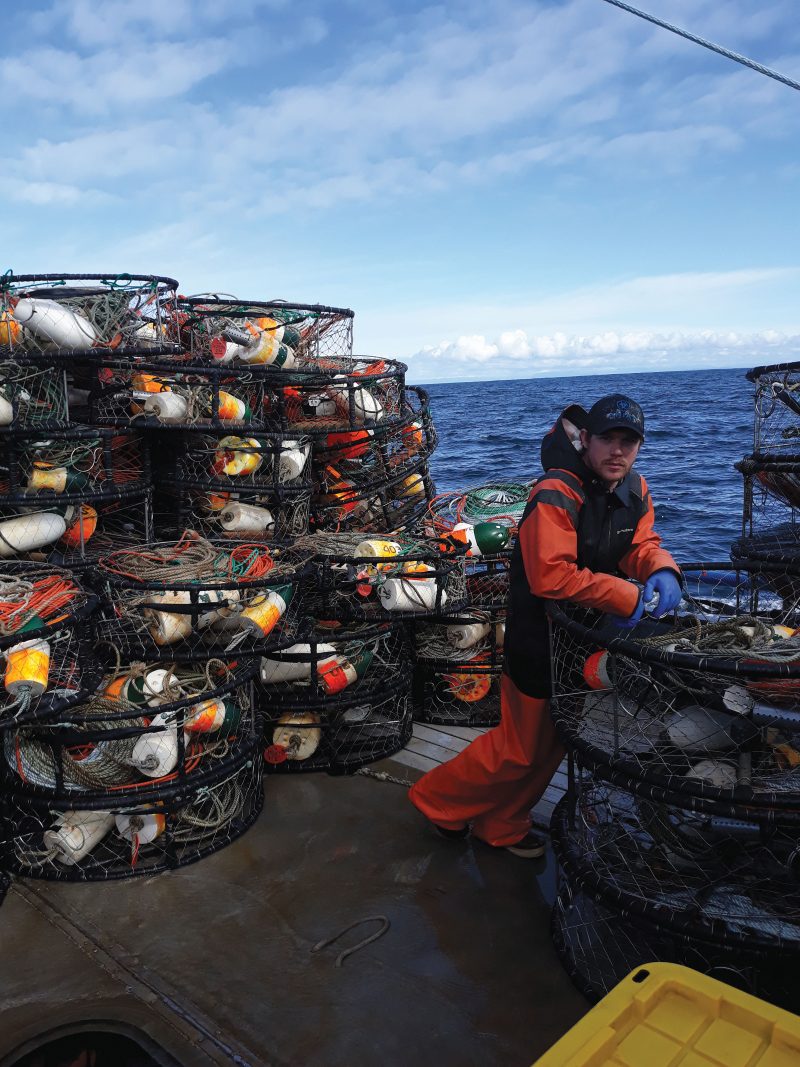
As the tide pulls the foamy crests of waves away from rocky shores, a sensory smorgasbord is unveiled… Briney air is filled with scents of seaweed; tiny, sporadic fountains in the sand announce the hiding places of geoducks and clams; beyond the shores, glittery sunshine sparkles on bobbing markers of crab pots, dropped for sport and for survival.
WHEN THE TIDE IS OUT, THE TABLE IS SET.
Often attributed as a Native American phrase, “When the tide is out, the table is set,” is self explanatory. The bounty of the Salish Sea – nearly 6,000 miles of shoreline and with thousands of species – seems endless. The network of waterways from the Straits of Georgia to the Strait of Juan de Fuca and Puget Sound, even feeds rich nitrogen into the ocean itself, sustaining life beyond our coasts. Nearly 3,000 species of marine life, including all seven species of Pacific Salmon, feed here.
From the Coast Salish Tribes of Indians who first inhabited the land to the colonizing cultures who have since come to call it home, there are many cultural connections to our waterways as a food source.
In archaeologically significant locations of the Coast Salish Tribes, no fewer than 50 various marine life forms have been found as historical food sources.
Octopus, snails, clams, barnacles, shrimp are among the incredibly diverse types of shellfish and fish in Native Americans’ traditional diets here. Today, the sea and its shores continue to be vital to their culture and survival.
“I AM HAPPY AS A CLAM AT LOW TIDE.”
“Why is a clam happy?,”asked Mel Sheldon, former chairman of the Tulalip Tribes, after providing the idiom as a greeting. “Because they are squirting against the world!”
Their squirting is a signal that has made many clam diggers happy, as well. Hunting for clams and harvesting mussels, fishing for salmon and more, have represented family, care for community, connection, and celebration for the Native Americans of the Coast Salish region for generations. Our inland waterways represent a food source, and a means of making a living.
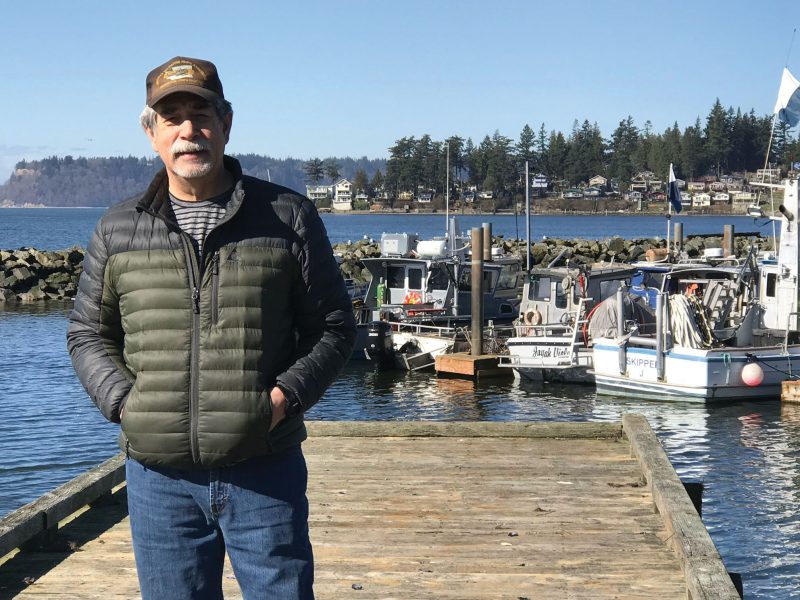
The victory in District Court that came to be known as the Boldt Decision reaffirmed the rights of tribal fishermen to enjoy this key form of sustenance, for food and finance, once again. Sheldon had recently returned from Vietnam as a young helicopter pilot when the 1974 decision upheld Native fishing rights.
“Boldt allowed me to become a full time fisherman,” Sheldon said, adding he “drydocked” for 15 years for a leadership role in tribal affairs.
The article continues below.

As a Sioux and Tulalip Indian, Sheldon has fished from Alaska to San Francisco.
Dramatic declines in the salmon populations have shifted the commercial operations to more plentiful crab and geoduck. Though geoduck were found in archaeological digs of tribal communities, Sheldon said today they’re mainly shipped to Japanese markets where they’re in high demand.
“When I went down to the marina maybe eight years ago I didn’t know anybody down there,” he said. “It was a whole new generation. There was a resource and they could make a living like our ancestors… feed their families as a resource, then have enough money to go hunt for elk or deer.”
While the numbers of shrimp, salmon and other sea life are diminishing, the interest in them and their cultural connection among native youth is growing.
“Today, every spring we have the Return of the Salmon Ceremony. That’s part of our mythology, part of our culture. Today, if you go to the salmon ceremony, a whole group of young kids is there. We are creating memories, and hope that the Chinook salmon could carry on. Hopefully salmon will be around fully for their lifetime.”
GENERATIONS OF FISHERMEN
Sheldon, whose grandmother was Norwegian, remembers her cooking up batches of herring for him. In those days, he said, the herring were enormous in size.
The numbers and size of fish have diminished, as have the fleets of fishermen whose boats once were the mainstay of the Port of Everett’s marina. The Norwegian and Croatian communities, in particular, were a tremendous part of the culture and commerce of Everett and Anacortes.
“I got a freezer full of salmon right now,” said commercial fisherman Nik Mardesich.
He is the descendant of a long line of Croatian fishermen. Mardesich fishes the waters of Washington and Bristol Bay, Alaska. In the same spirit of camaraderie as his grandfather’s community before him, Mardesich and fellow fishermen repair their nets in the off season and fish for salmon when they can.
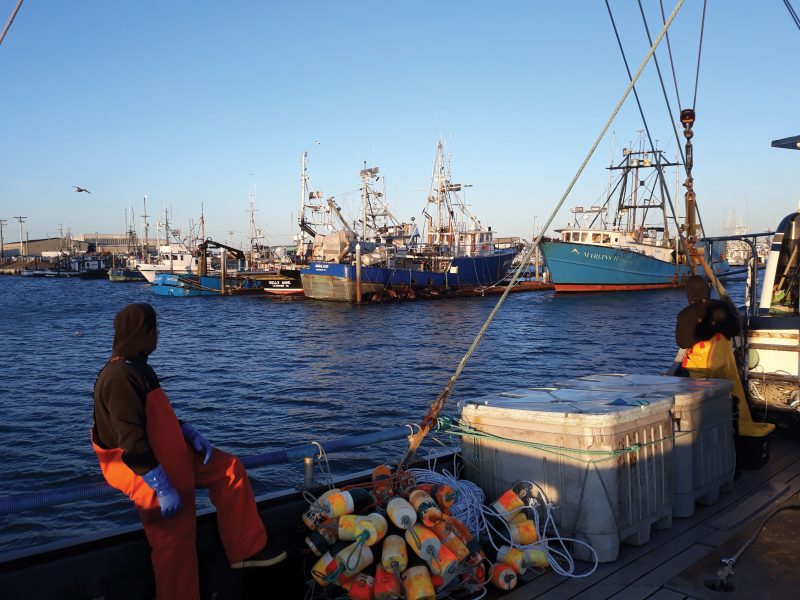
“I grew up out here catching crab on the sand flats, catching shrimp and prawn out on the water my whole life,” he said. Mardesich was raised on Guemes Island near Anacortes, his family having left Everett generations before.
His fishermen buddies are tied to the bounty of the sea as a part of their identity. “A lot of us, when we were little kids, were catching crab, digging clams with our bare hands. We’d be four or five years old. I still do it. Or at least,” he added, his buddies “wish they were.”
COOKING SQUID ON THE PIER
The pier in Edmonds is to many people of Asian descent like a nightclub is to youth looking for a good time – it’s THE place to be. People of Thailand, Korea, the Philippines and other Pacific Islanders gather on the nearly 1,000-foot long pier year round. During crab season, the crab pots are stacked up near the rails as they are dropped in and out with a fresh turkey leg for bait. The nearby waters around the ferry dock are a marine sanctuary, where lingcod grow giant as the years pass and they’re allowed to live out long lives. But around the pier, it’s fair game for crab, salmon and squid.
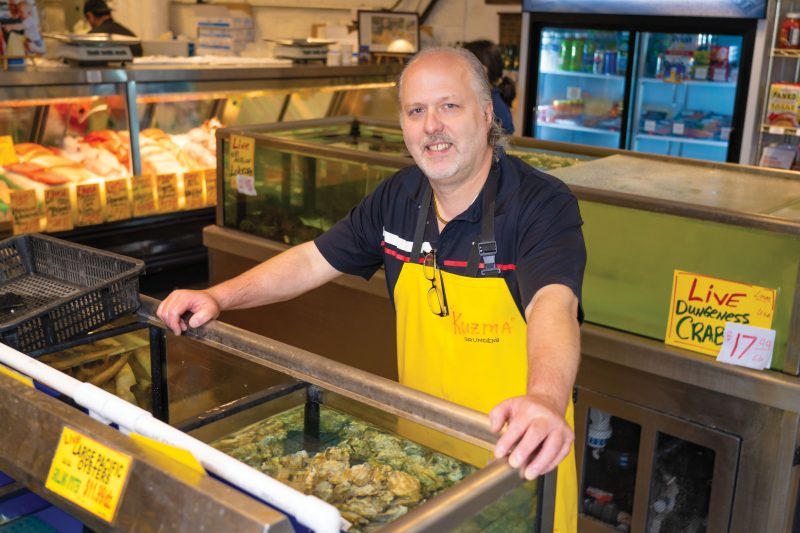
Squid season is when you see the biggest gathering of cultures. The squid begin arriving in September and stay as long as the weather is cold enough. They’re attracted to the lights around the pier, and are easy picking for eager pier-side diners.
“We’ve been doing that since we were kids,” said Madayag, who grew up in Edmonds. “There’s a big Korean community. They will cook it up right on the dock.”
“I BELONG TO THE SEA.”
In Skagit County, Gerardo Rodarte is growing oysters. It takes a year of growing a crop from a tiny “seed” on the Samish Bay tideflats. Rodarte arrived here from Sayulita, Mexico, a fishing village where his neighbors would sell fish on the shore as soon as they brought it back from the sea, and he would “go to the little crick to get shrimp.”
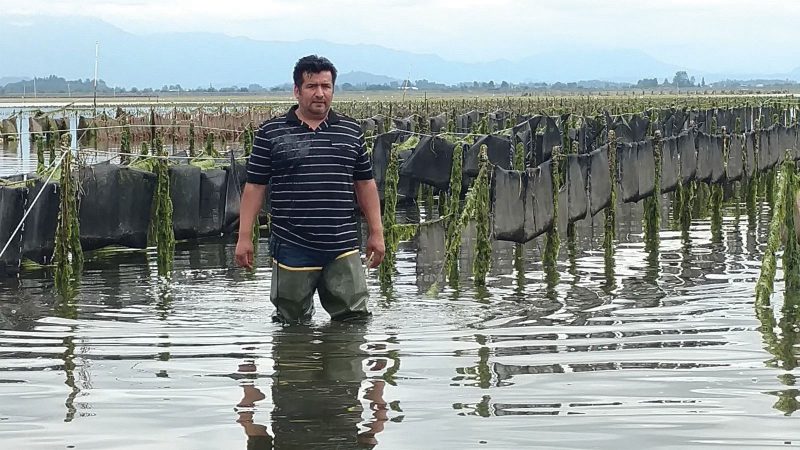
“I feel like I was born to be on the water. I feel more better to be on the water than to be on the city. When I am on the water, I feel happy. I feel like I belong to the sea.”
– Gerardo Rodarte, Samish Gold Seafoods
Rodarte saved his money, he said, and bought his own land to farm, opening Samish Gold Seafoods.
Whatever the cultural roots, the Salish Sea is the shared thrill, the lifeblood, and the sustenance of all who live on its shores.
“The water is the one that brings us all together,” Sheldon said.